

Mitochondrial oxidation of long-chain fatty acids provides an important source of energy for the heart as well as for skeletal muscle during prolonged aerobic work and for hepatic ketogenesis during long-term fasting.
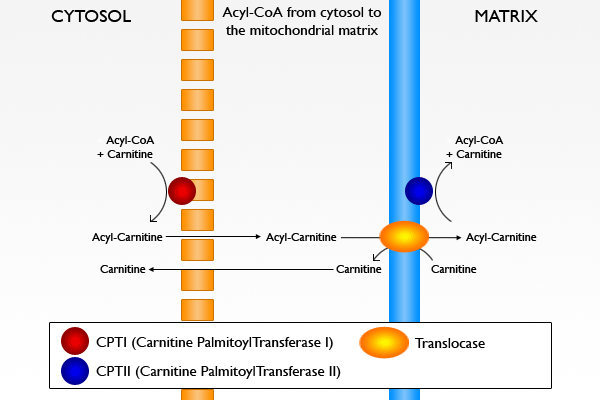
The carnitine shuttle is responsible for transferring long-chain fatty acids across the barrier of the inner mitochondrial membrane to gain access to the enzymes of beta-oxidation.
The carnitine shuttle consists of three enzymes (carnitine palmitoyltransferase 1 (CPT1A and CPT1B) , carnitine acylcarnitine translocase (SLC25A20), carnitine palmitoyl-transferase 2 (CPT2)) and a small, soluble molecule, carnitine, to transport fatty acids as their long-chain fatty acylcarnitine esters.
Fonction
The oxidation of fatty acids is an important source of energy for ATP production in mitochondria through the entry of acetyl-CoA into the Krebs cycle.
Fatty acids are oxidized inside the mitochondrial matrix but the fatty acids to be oxidized come from the cytosol. Fatty acids are activated in the cytosol by esterification with Coenzyme A (CoA) to form acyl-CoA (RCO-CoA, where R is the fatty acid acyl group).
Activated medium-chain fatty acids (C8 and C10) freely diffuse into mitochondria to be oxidized but long chain fatty acids do not diffuse into mitochondria so they must be transported in.
The transport of long chain fatty acids into mitochondria for oxidation is accomplished by the carnitine palmitoyltransferase system (CPTI and CPTII). CPTI exchanges carnitine for the CoA attached to long chain fatty acids to form a fatty acid-carnitine conjugate (RCO-carnitine).
The fatty acid-carnitine is transported into the matrix by a transporter protein in the inner mitochondrial membrane.
Once the fatty acid-carnitine is inside the matrix, CPTII exchanges CoA for carnitine to produce fatty acid-CoA once again, ready to enter fatty acid oxidation in the matrix to produce energy. The free carnitine is transported back out to renew the cytoplasmic pool of carnitine and allow the transfer process to continue.
Pathology
 systemic carnitine deficiency (MIM.212140)
carnitine palmitoyltransferase deficiency I (MIM.255120)
carnitine palmitoyltransferase II (CPT II) deficiency (MIM.255110)
- neonatal onset (MIM.608836)
- infantile
- late-onset (MIM.255110)
carnitine acetyltransferase deficiency (CRAT deficiency) (MIM.600184)
acyl-CoA oxidation
See also